
Get in touch with us today and our team of imaging professionals will be pleased to assist you.
Network Cables and Optical Transceivers
Use this topic to understand the network connection accessories available for connecting a camera to a network interface card (NIC), switch, or other compatible network device.
This topic describes cable and transceiver types and their purposes. It does not select a NIC or switch or provide installation instructions.
Before you choose a connection type
Identify these requirements before selecting a cable or transceiver:
- The exact camera model and data interface
- Whether the camera connects directly to a NIC or through a switch
- The device-side interface and supported Ethernet link rate at every endpoint
- The complete cable route length
- For a modular fiber link, the required fiber type, optical reach, and operating temperature
Use the current camera, NIC, and switch documentation to confirm these requirements.
Compare connection types
Choose copper when compatible endpoint ports, the cable route length, and—if required—Power over Ethernet support a copper connection. Choose optical when the cable route, electrical environment, or installed fiber infrastructure favors fiber. If the system must allow separate replacement of the fiber cable and transceivers, use a modular fiber link rather than an AOC.
Copper connection types
CAT6A Ethernet cables
CAT6A Ethernet cables provide shielded copper connections between compatible RJ45 ports. Emergent Vision CAT6A cables support 1, 2.5, 5, and 10GigE link rates.
Use a CAT6A cable when the camera and the other endpoint both have compatible RJ45 ports.
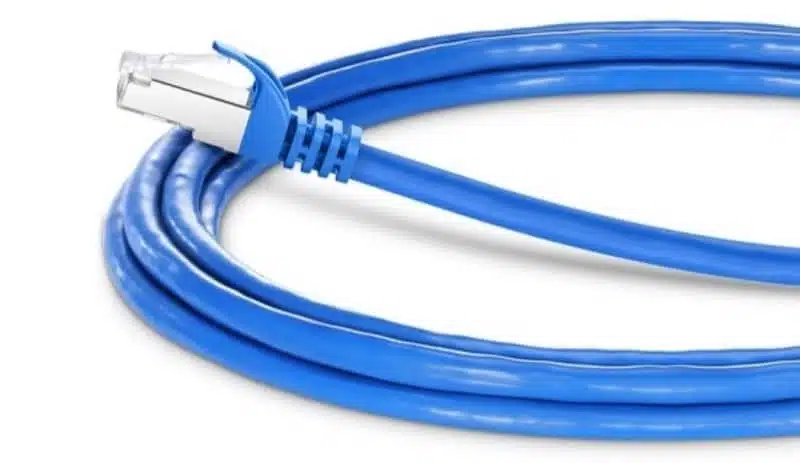
Figure 1: CAT6A Ethernet cable
Direct-attach copper cables
A direct-attach copper (DAC) cable is a copper cable with SFP+, SFP28, or QSFP28 connectors permanently attached at both ends. It connects compatible SFP+, SFP28, or QSFP28 ports directly and does not require separate transceivers.
Emergent Vision lists DAC cables for:
- 10GigE SFP+ connections
- 10/25GigE SFP28 connections
- 100GigE QSFP28 connections
Use a DAC cable when both endpoints have compatible ports and a fixed-end copper cable meets the installation requirement.
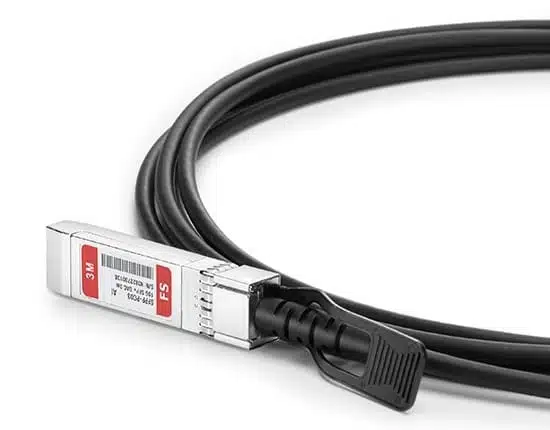
Figure 2: Direct-attach copper cable
Optical connection types
Modular fiber links
A modular fiber link uses a fiber-optic cable and a compatible optical transceiver at each endpoint. The transceivers install in the camera, NIC, or switch ports. The fiber-optic cable connects the LC ports on the transceivers.

Figure 3: A modular fiber link uses a transceiver at each endpoint and a separate fiber-optic cable.
Use a modular fiber link when you need to select the fiber cable and transceivers separately.
Fiber-optic cables
Emergent Vision provides LC-LC fiber-optic cables in two types:
- Multimode fiber: OM3 50/125 fiber
- Single-mode fiber: 9/125 fiber
The fiber type must match the selected optical transceivers. The physical fiber cable length must meet the installation requirement.
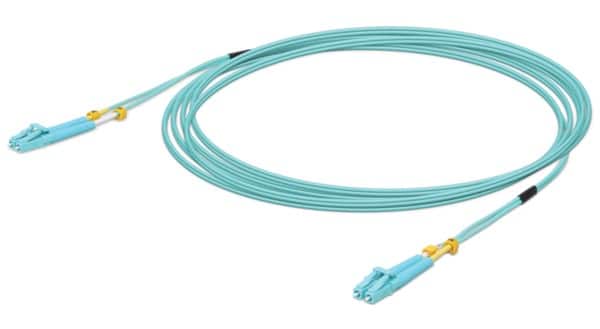
Figure 4: Multimode fiber-optic cable
Optical transceivers
An optical transceiver converts the electrical signal at a device port to an optical signal for the fiber-optic cable. Emergent Vision lists optical transceivers for:
- 10GigE SFP+ ports
- 25GigE SFP28 ports
- 100GigE QSFP28 ports
Select a transceiver that matches the device-side interface, supported link rate, fiber type, required optical reach, and applicable operating-temperature requirement. If the endpoint is a switch, also confirm that the switch supports the selected transceiver and its encoding.
Optical reach is the maximum supported transmission distance for a transceiver and matching fiber combination. It is not the physical length of the installed fiber cable.
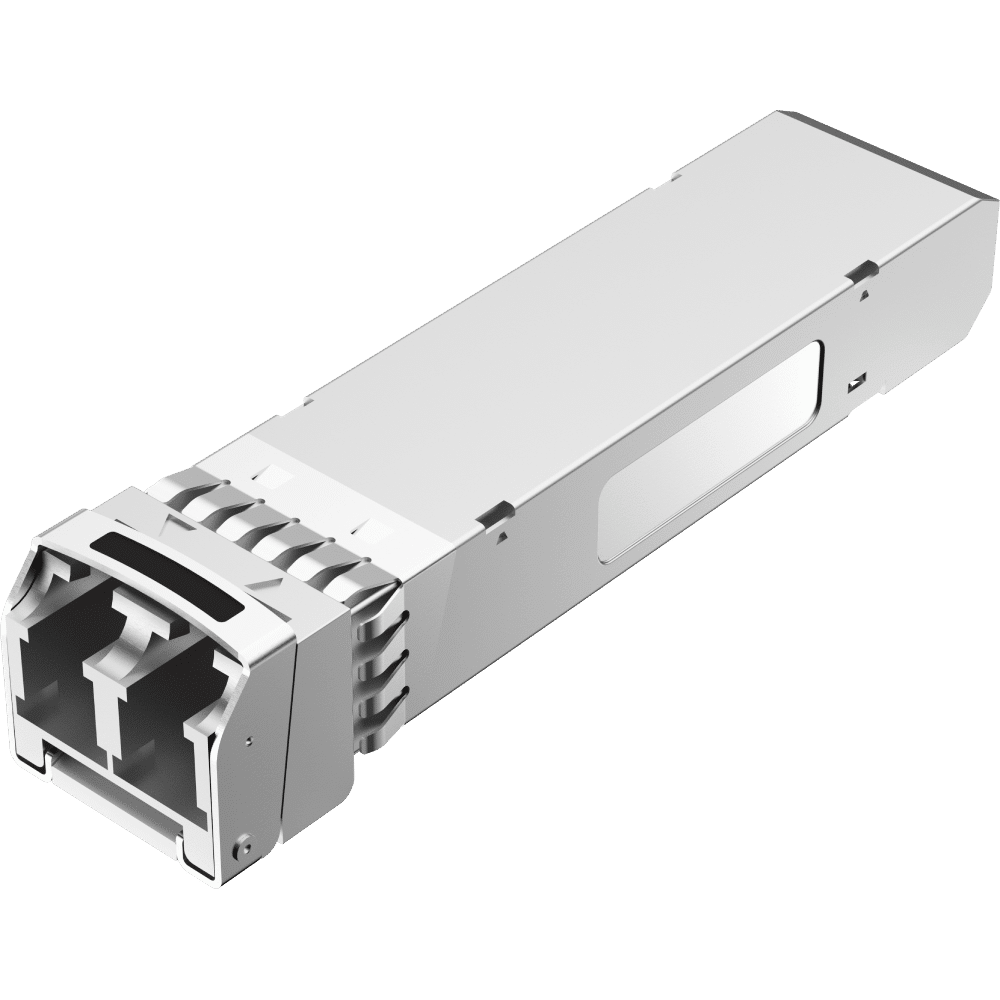
Figure 5: 10G SFP+ optical transceiver
Active optical cables
An active optical cable (AOC) is an optical-fiber cable with integrated active electronics at both connector ends. The assembly converts electrical signals to optical signals and back. It does not use separately selected transceivers or a separate fiber patch cable.
The current Emergent Vision cable range includes 100GigE QSFP28 AOCs.
Use an AOC when a current AOC matches the endpoint interface and link requirements.
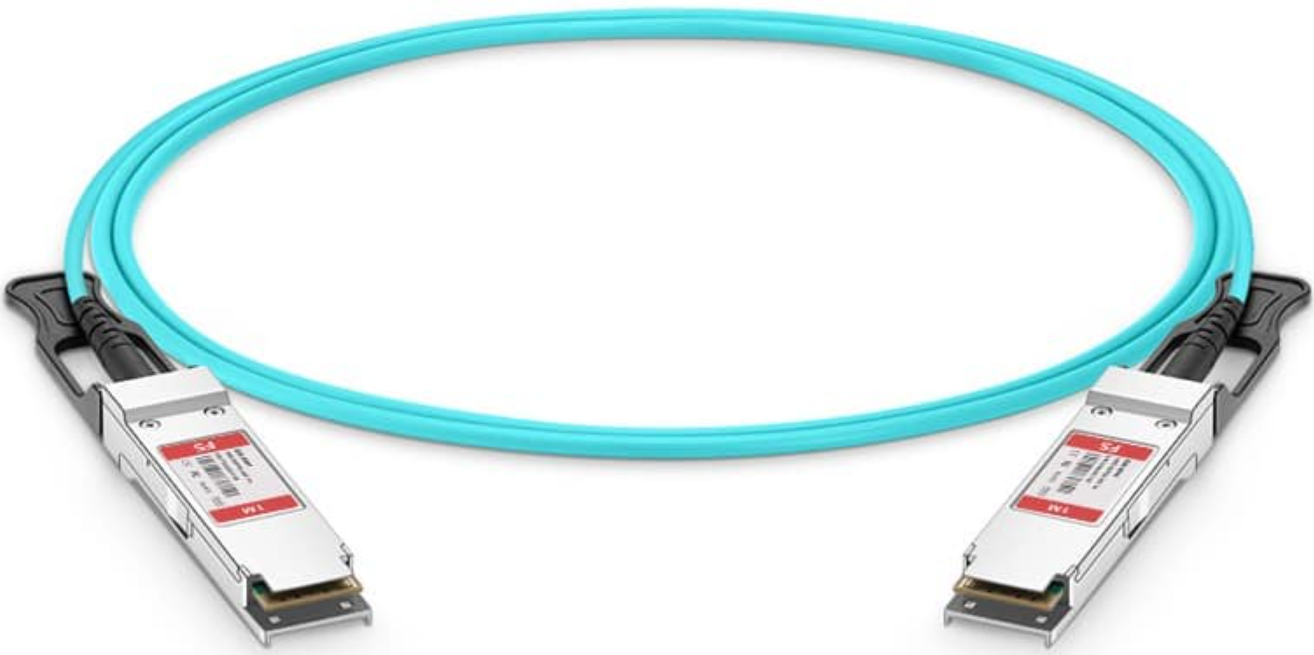
Figure 6: Active optical cable
Find product candidates with the Cable Selector
Use the System Designer's Cable Selector after identifying the endpoint interfaces, required link rate, and cable-route length. The selector narrows the current Emergent Vision product range; it does not confirm complete system compatibility.
- Select the product category in Description.
- Select Cable for a CAT6A cable, DAC cable, or fiber-optic cable.
- Select Transceiver for a pluggable optical transceiver.
- Select AOC for an active optical cable.
- Select Medium and Type to narrow the connection type.
- For CAT6A cables, select Copper and CAT6A.
- For DAC cables, select Copper and Direct Attach.
- For fiber-optic cables and optical transceivers, select Optical, then select Multi-Mode or Single-Mode.
- For AOCs, select Optical.
- Select the applicable Connector.
- Select RJ45 for a CAT6A cable.
- Select SFP+, SFP28, or QSFP28 for a DAC cable, as required by the endpoint ports.
- Select LC-LC for a fiber-optic cable.
- Select SFP+/LC, SFP28/LC, or QSFP28/LC for an optical transceiver.
- Select QSFP28 for an AOC.
- Select the required Speed. The selected speed must be supported by both endpoint ports.
- Select the required Length.
- For cables and AOCs, select the physical cable length. For transceivers, the listed distance is the supported optical reach with the matching fiber type, not the physical length of a supplied cable.
- Use Shielding/Core as applicable.
- Select the required copper shielding for a copper cable. For fiber products, select the required fiber core: OM3 50/125 for multimode fiber or 9/125 for single-mode fiber.
- Open each candidate product and compare its specifications with the recorded system requirements and the current camera, NIC, and switch documentation.
Matching port form factors, connector types, or link rates alone does not establish compatibility.
See also
Get in touch with us today and our team of imaging professionals will be pleased to assist you.